Stone Dust for Paver Beds and Pads in Massachusetts
Also sold as #10 Stone Screenings
Where Massachusetts till meets shallow ledge, Stone Dust gives hardscape work a flat setting course above the supporting layer.
- Size: 1/4 inch minus
- Grading: Stone dust and fine particles
- Type: Angular crushed stone
From $458 for 1 ton, delivery included (larger loads cost significantly less per ton)
Free delivery included
Free delivery anywhere in Massachusetts
Pick a delivery date
Weekday delivery, earliest Oct 30
“Ordered Stone Dust from Massachusetts Rock Supply and the free delivery was a huge plus. Everything showed up when expected, and I'm really happy with how easy it was.”
Mike K. · Verified Buyer
Get a Free Quote
Fill out the form and our sales team will get back to you within the hour.
Size and Grading
- Size
- 1/4 inch minus
- Grading
- Stone dust and fine particles
- Type
- Angular crushed stone
Cut a patio square out of a back lawn on the Worcester plateau and the spade stops on stone long before it stops on anything else. Under the loam is glacial till, full of cobbles, and under that in many places sits a dense lower till that water barely moves through. Ledge shows up at awkward depths. You do not get to design the ground, so the work goes into the layers you bring in, and stone dust is the one that turns a rough compacted base into something a paver will actually sit flat on.
Quarter inch minus, with the fines left in on purpose
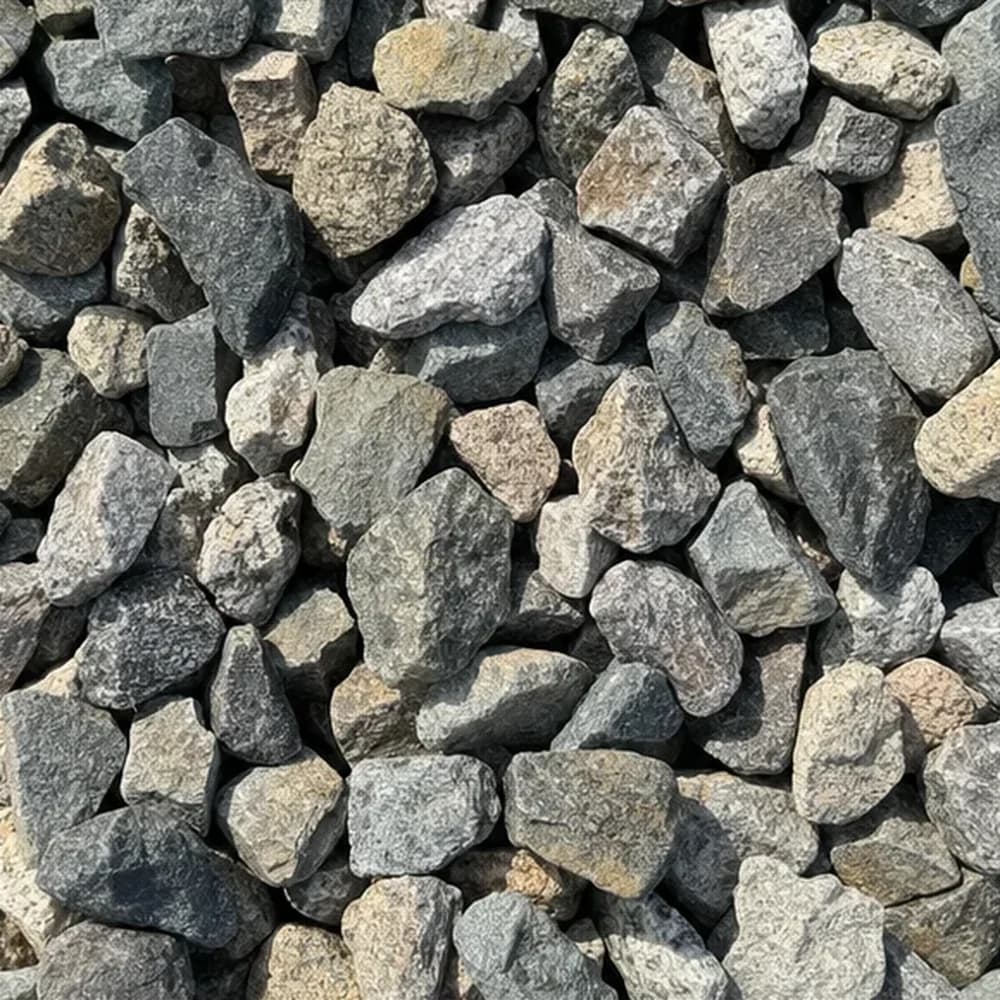
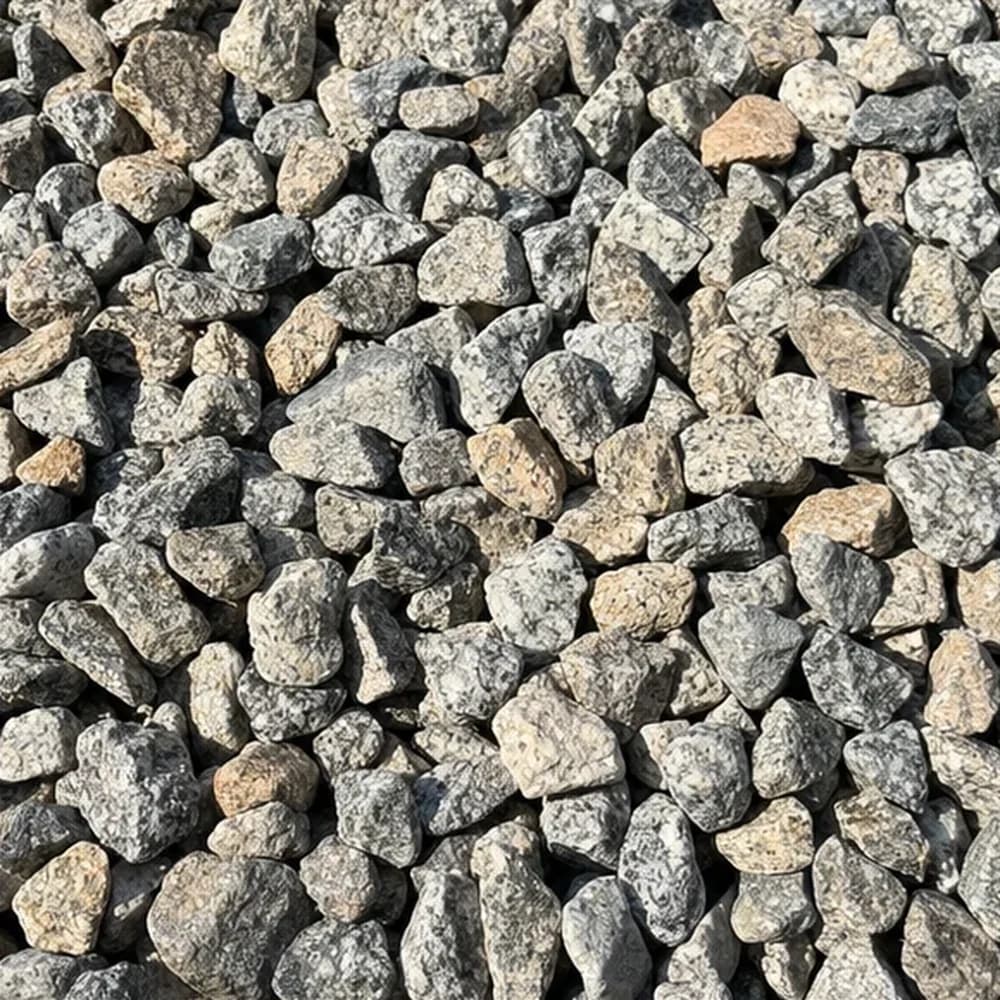
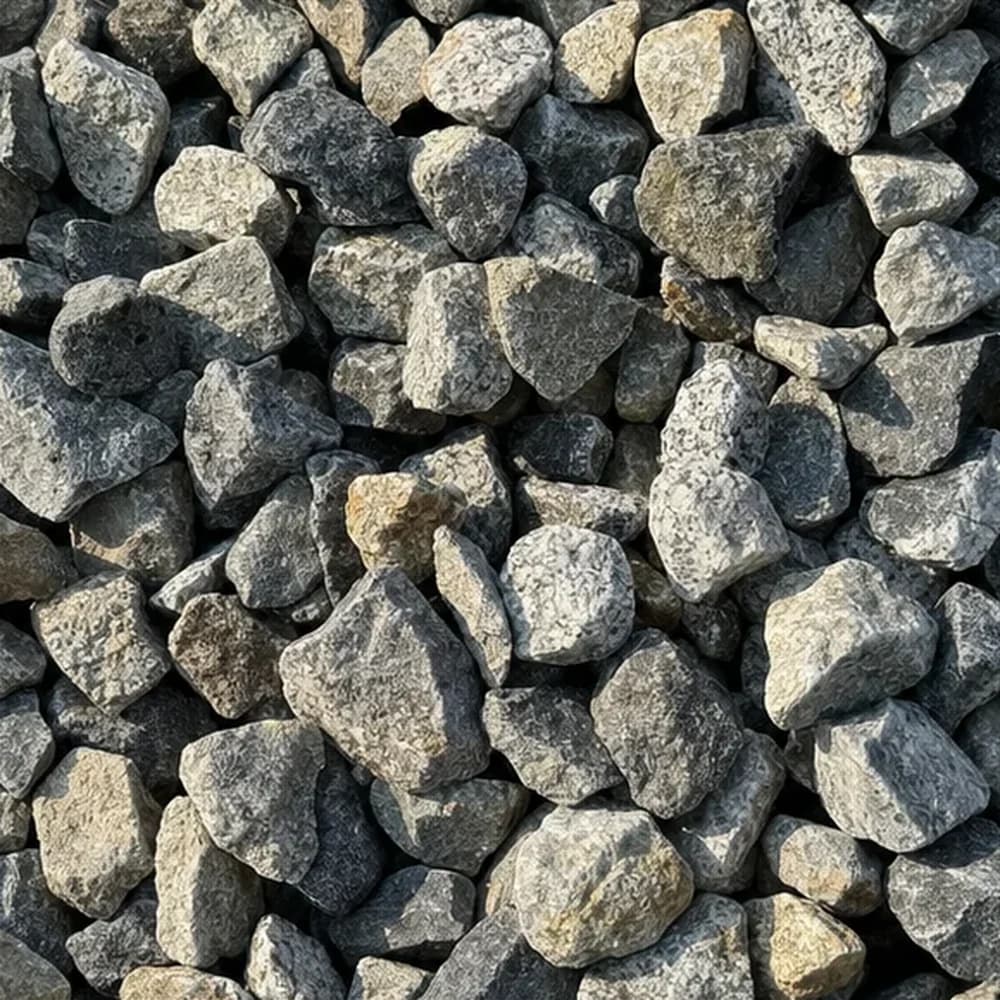
The material is quarter inch minus: angular crushed stone at the top of the range, then everything smaller, down to a powder-fine content that coats your gloves. Nothing has been washed out of it. That fine fraction is the whole point, because it travels into the gaps between the larger pieces under compaction and leaves a layer with very little air left in it.
Two consequences follow. Compacted damp, it locks up hard and holds a screeded line. Left dry, it will not bind properly, and left open to running water it will wash. Both facts shape how the material is used on a site.
Where stone dust fits: a fire ring, a barn pad, a single-car drive
Three jobs, three different depths and three different finishes.
| Job | Typical depth | What goes over it |
|---|---|---|
| Fire pit surround | 2 in over a compacted base | Nothing, or a ring of set pavers |
| Pole barn or equipment pad | 3 to 4 in over base | Nothing; it is the working surface |
| Single-car gravel drive | 2 in as a setting course | A surface stone if vehicles turn on it |
For the fire pit surround, the dust is doing two jobs: giving a flat bed for a paver ring and giving a surface that will not hold puddles against the stone. For a barn or equipment pad, it packs into a hard, even floor that sheds water once it is graded with a fall. On a single-car drive it works as the setting course under flatwork or as a firm skim over an existing base, but it is not the load-carrying layer.
The load is carried by what sits underneath. That is Processed Gravel for most Massachusetts base work, or Crusher Run where a slightly finer pack suits the job. Stone dust goes on top of a base that is already compacted, never instead of it.
Freeze-thaw on dense till, and the edge that creeps out first
Late winter is what tests the work. Water held near the surface by slow-draining till freezes, lifts whatever is above it, then leaves the ground soft for a few weeks as it thaws. A tightly packed dust layer resists that better than loose material because there is less open space for water to occupy, but it is not immune, and the failures show up in the same two places every time.
The first is the edge. An unconfined edge has nothing holding it, so frost pushes it outward a fraction each cycle and rain carries the fines away. Edge restraint, a set border course or a timber edge fixes that. The second is any spot where water runs across the surface rather than off it. Grade a fall of roughly a quarter inch per foot so water leaves, and keep downspout discharge off the pad entirely.
Compaction season is the other constraint. Frozen ground will not compact and neither will a frozen pile, so this is spring-through-late-autumn work across most of the state, with a shorter window in the hilltowns.
A 16-foot fire ring and a 24 by 36 barn pad, in tons
Two hypothetical examples. This site publishes about 2,900 lb per cubic yard for stone screenings and dust, roughly 1.45 tons per cubic yard, and that approximate figure converts both.
A 16 foot circle of dust around a fire pit, 2 inches deep:
- Radius: 16 / 2 = 8 ft
- Area: 3.14 x 8 x 8 = 201 square feet
- Depth: 2 / 12 = 0.167 ft
- Volume: 201 x 0.167 = 33.6 cubic feet
- Cubic yards: 33.6 / 27 = 1.24
- Tons: 1.24 x 1.45 = 1.8
A 24 foot by 36 foot equipment pad at 4 inches:
- Area: 24 x 36 = 864 square feet
- Depth: 4 / 12 = 0.333 ft
- Volume: 864 x 0.333 = 288 cubic feet
- Cubic yards: 288 / 27 = 10.67
- Tons: 10.67 x 1.45 = 15.5
With the five percent the stone calculator adds by default, the pad figure moves to about 16.2 tons. A single-car drive at 10 by 50 feet and 2 inches lands much lower: 500 square feet, 83.3 cubic feet, 3.09 cubic yards, near enough 4.5 tons.
Odd shapes are easier to handle in the paver base calculator, which takes up to five separate areas and adds them for you.
What the driver needs on the day in a dense town
Decide the tip spot before you book. The truck needs a clear route in and clear overhead, and it needs somewhere it can raise a body safely, which rules out a lot of tight in-town driveways with wires across them. A tarp under the pile saves a long clean-up on a paved drive and keeps the fines out of the lawn.
Have the base done and compacted before the dust arrives, not after. This material sheds water badly when it is loose, so a pile left uncovered through a wet week turns into something you will be breaking up with a rake. If the job is more than a day, tarp what you are not using.
When the numbers are settled, pick a tonnage and a delivery date on this page. Delivery is arranged at checkout by ZIP code, and the driver needs clear access to the dump spot you have chosen.
Quickly Calculate How Much You Need
Material: Stone Dust
How to Measure
Measure the length and width of your project area in feet
Decide on depth in inches (2" for landscaping, 4" for driveways)
Enter the values above and we'll calculate the tonnage you need
Need help figuring out the right amount? We can help!
Call or text us at (508) 625-9266 and we'll help you calculate the right quantity for your project.
Not sure how much you need? The Stone Calculator has depth guides, coverage charts and worked examples for this material.
Frequently Asked Questions About Stone Dust
Customer Reviews
Picked up on a Friday and these guys made ordering painless. The Stone Dust was exactly what I needed and the load was ready when I got there. Super easy experience, I'd definitely go back.
Ashley H. · Quincy, MA · Verified Buyer
Needed Stone Dust for a patio base and the team made it super easy. The driver was friendly and careful about where he placed the pile, which I really appreciated.
Mark N. · Quincy, MA · Verified Buyer
Ordered Stone Dust from these guys and the delivery got here right on time. Driver was friendly and careful about where he placed it, really happy with the whole thing.
Rachel G. · Worcester, MA · Verified Buyer
Ordered Stone Dust from Massachusetts Rock Supply and the free delivery was a huge plus. Everything showed up when expected, and I'm really happy with how easy it was.
Mike K. · Quincy, MA · Verified Buyer
Stone Dust has 4 verified customer reviews with an average rating of 5 out of 5.