Processed Gravel for Massachusetts Base Work
Also sold as Road Base
Also known as: processed, bank run gravel, 3/4 processed
Once packed into place, Processed Gravel gives Massachusetts driveway work a stable base where frost and shallow ledge affect the site.
- Size: 3/4 inch minus
- Grading: Graded mix of crushed stone, gravel and binding fines
- Type: Crushed aggregate blend
From $381 for 1 ton, delivery included (larger loads cost significantly less per ton)
Free delivery included
Free delivery anywhere in Massachusetts
Pick a delivery date
Weekday delivery, earliest Oct 30
“Ordered Processed Gravel from them and it was a super easy experience. The free delivery was a big plus, and it showed up exactly when expected. Really happy with the whole thing and would definitely order again.”
Angela L. · Verified Buyer
Get a Free Quote
Fill out the form and our sales team will get back to you within the hour.
Size and Grading
- Size
- 3/4 inch minus
- Grading
- Graded mix of crushed stone, gravel and binding fines
- Type
- Crushed aggregate blend
The calendar decides most processed gravel orders in this state. Frozen ground takes no compaction, so base work runs from the spring thaw through late autumn, and both ends of that window are awkward. In early spring the dense lower till under much of Massachusetts holds snowmelt close to the surface, and a load spread on ground that soft will pump and rut before it ever packs. Late autumn gives firm ground and short working days. Between those edges sits the stretch when driveways, shed pads and wall bases actually get built, and that is the stretch worth booking a delivery inside.
One inch minus in the hand, and why the fines matter on till
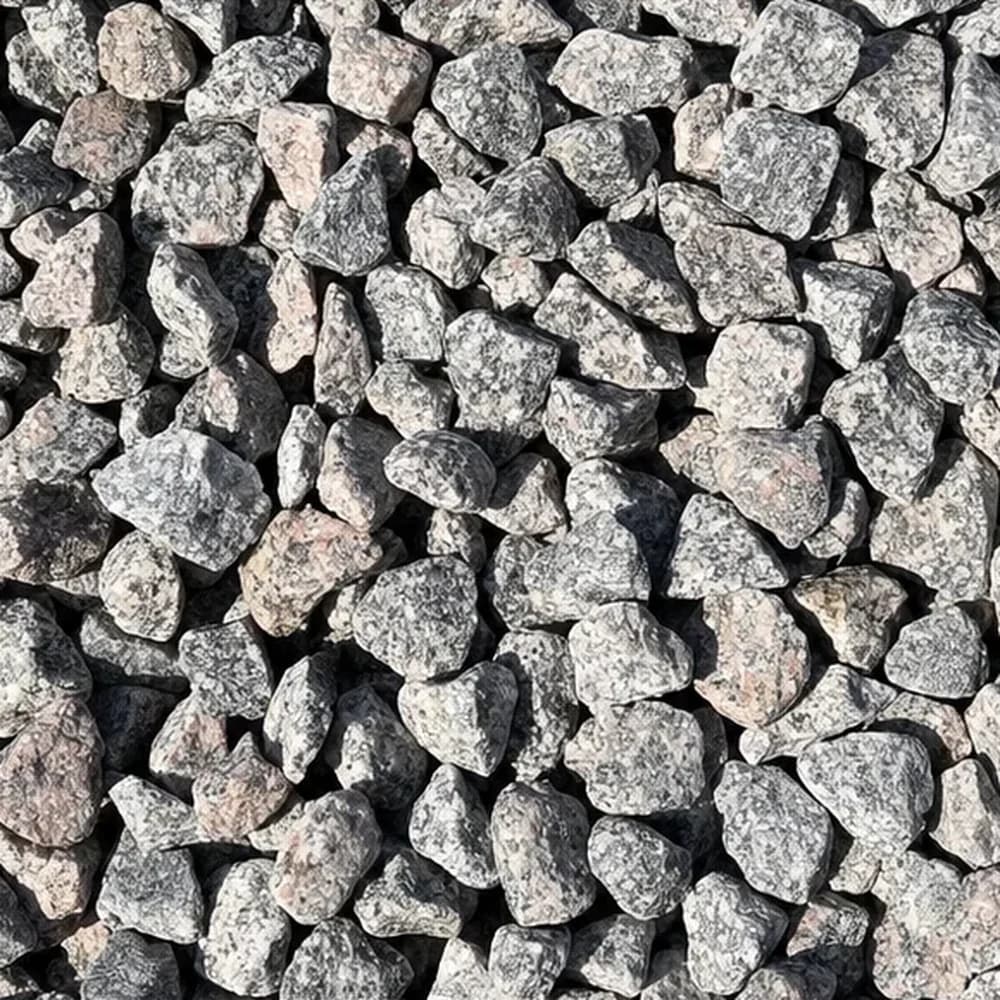
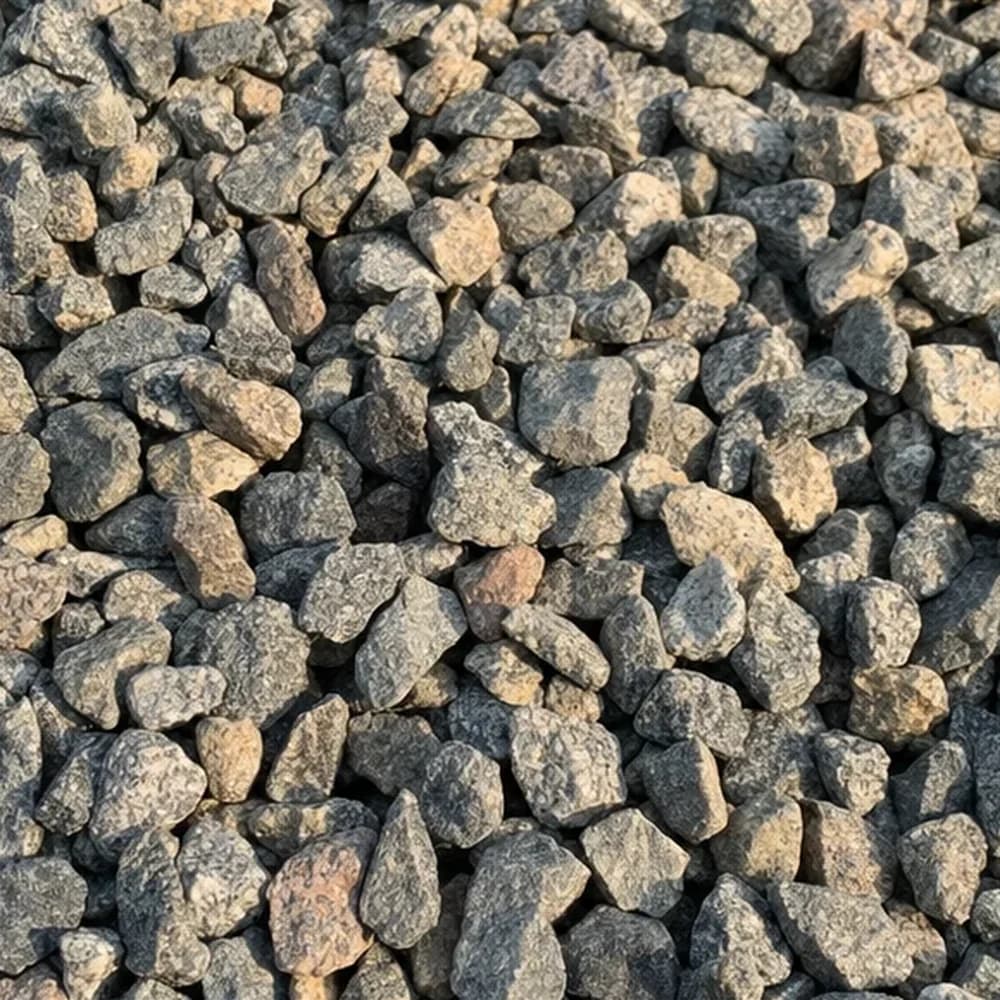
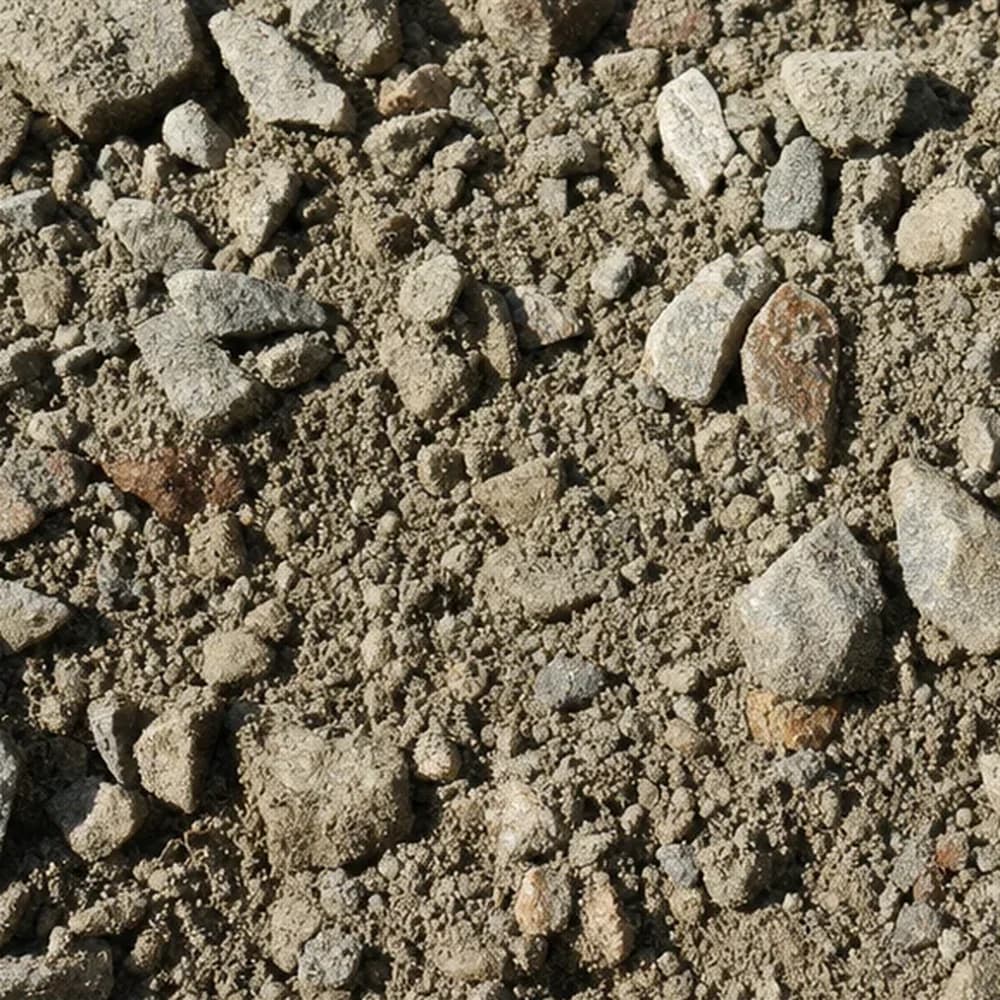
The material arrives as a graded blend: crushed stone and gravel up to an inch, then progressively smaller pieces, then a binding fine content that looks close to dust in the pile. Pick up a damp handful and squeeze it and the shape holds. That behavior is the whole reason the blend exists. Large pieces carry the load, the fines travel into the voids under compaction, and the finished layer ends up dense rather than loose.
Local suppliers say processed gravel far more often than road base, and some list it as dense grade or three quarter inch dense grade. MassDOT writes the equivalent layer into its material sections for town streets and sidewalks, M1.03.1 for processed gravel for subbase and M2.01.7 for dense graded crushed stone, with M1.03.0 gravel borrow below that. Those section numbers describe how the material gets specified around here. They are not a stamp that travels with a delivery.
Where processed gravel earns its depth under 48 inches of frost
The state code figure for frost depth is 48 inches. No driveway base goes that deep and none needs to. What the number tells you is how much seasonal movement the ground underneath will go through. Water in the subgrade freezes, lifts, thaws, and leaves the ground soft for a few weeks, which is why gravel drives across Central Massachusetts and the western hilltowns go to washboard in March rather than in July.
A properly compacted layer helps in two ways. It spreads wheel load across a wider patch of subgrade than a thin surface course can, and once packed it takes in far less water than the soil beneath it. On the dense, slowly draining lower till under Greater Boston, MetroWest and the Worcester plateau, that matters more than it would on the deep outwash sand of Cape Cod, where rain leaves the surface quickly without any help.
Three Massachusetts jobs that call for clean stone instead
This material gets bought for work it does not suit, usually because it is already sitting in a pile on the property.
A downspout splash area is the common one. The same fines that make the blend compact will hold water and silt up, so a splash pad of processed gravel stays wet and turns grubby. River Rock or a washed stone drains and looks better doing it.
Retaining wall backfill is the second. The drainage zone directly behind a wall wants open, angular stone with nothing in it to clog, which is #57 Stone work. Processed gravel belongs under the wall as the leveling pad and in the compacted fill well back from the block, not pressed against it.
A pond or shoreline edge is the third. Anything fine enough to compact is fine enough to be carried away, and banks here take real force, from nor'easter waves along the coast and from fast hill streams after heavy rain inland. That is a job for RipRap.
Depth for a MetroWest driveway, a shed pad and a contractor turnaround
Depth figures are quoted compacted, not loose, and the two numbers are never the same. Material placed loose loses a visible share of its height once it is rolled or tamped, so spread deeper than the finished thickness you want.
The measuring guide on this site works from two inches for landscaping and four inches for driveways, and that is a fair starting frame on Massachusetts till. A garden path sits at the shallow end. A residential drive carrying cars and the occasional delivery truck is built at the deeper end, placed and compacted in separate lifts rather than one thick pass. A turnaround that has to take an oil truck, a plow or a loaded trailer wants the thickest section on the property, and the subgrade under it should be firm before a single yard is spread.
Two lifts compacted separately beat one thick lift every time, because a plate compactor only reaches so far down.
A 60-foot wall base in the Pioneer Valley, measured out
Here is a worked example, hypothetical rather than a real job. Picture a 60-foot segmental wall on a silty Pioneer Valley lot, with a leveling pad 24 inches wide and 6 inches deep.
- Area: 60 ft x 2 ft = 120 square feet
- Depth in feet: 6 / 12 = 0.5 ft
- Volume: 120 x 0.5 = 60 cubic feet
- Cubic yards: 60 / 27 = 2.22
With the ten percent the road base calculator adds by default for spillage, the figure is 2.44, so plan on roughly two and a half cubic yards.
Take that pad to 8 inches instead and the arithmetic moves: 120 x 0.667 = 80 cubic feet, and 80 / 27 = 2.96, near enough three cubic yards. Two extra inches across a 60-foot run costs most of another yard, which is useful to know before the truck is booked rather than after.
Material is sold by the ton, and this site publishes roughly 3,000 lb per cubic yard for processed gravel and road base, about 1.50 tons per yard, so the 6 inch pad is 2.22 x 1.50 = 3.3 tons and the 8 inch version 2.96 x 1.50 = 4.4 tons. Both figures are approximate, so check your own against the processed gravel calculator before ordering.
What Massachusetts drives get topped with once the base is packed
Very few drives in this state stop at the base. A compacted layer is usually topped with Driveway Gravel for a finished running surface, or with Stone Dust where flatwork such as pavers or bluestone is going down over it. Crusher Run does similar work at three quarter inch minus and is the better call where you want a slightly finer, tighter pack under a patio.
Order from this page by setting a quantity and picking a delivery date. Delivery is arranged at checkout from your ZIP code, and the driver needs a clear, reachable spot to tip the load. On the tight lots and shared driveways common across Greater Boston and the North Shore, decide where the pile is going before the truck is booked, not while it idles in the street.
Quickly Calculate How Much You Need
Material: Processed Gravel
How to Measure
Measure the length and width of your project area in feet
Decide on depth in inches (2" for landscaping, 4" for driveways)
Enter the values above and we'll calculate the tonnage you need
Need help figuring out the right amount? We can help!
Call or text us at (508) 625-9266 and we'll help you calculate the right quantity for your project.
Not sure how much you need? The Road Base Calculator has depth guides, coverage charts and worked examples for this material.
Frequently Asked Questions About Processed Gravel
Customer Reviews
Ordered Processed Gravel from them and it was a super easy experience. The free delivery was a big plus, and it showed up exactly when expected. Really happy with the whole thing and would definitely order again.
Angela L. · Boston, MA · Verified Buyer
Had Processed Gravel delivered by them and it got here right on time. Driver was friendly and careful about where he placed it, which made the whole thing easy.
Laura W. · Springfield, MA · Verified Buyer
Got Processed Gravel from Massachusetts Rock Supply and the whole order showed up right when I needed it. Free delivery was a nice bonus, and I'm really happy with how everything turned out.
Paul I. · Boston, MA · Verified Buyer
Went with Massachusetts Rock Supply for Processed Gravel and I'm really happy with how it turned out. The driver was friendly and careful about placing it right where I wanted.
Mike T. · Brockton, MA · Verified Buyer
Got Processed Gravel from these guys and the price was fair for what I got. I'm really happy with it and would definitely order again.
Wendy N. · Worcester, MA · Verified Buyer
Processed Gravel has 5 verified customer reviews with an average rating of 5 out of 5.