Railroad Ballast for Heavy Use Ground in Massachusetts
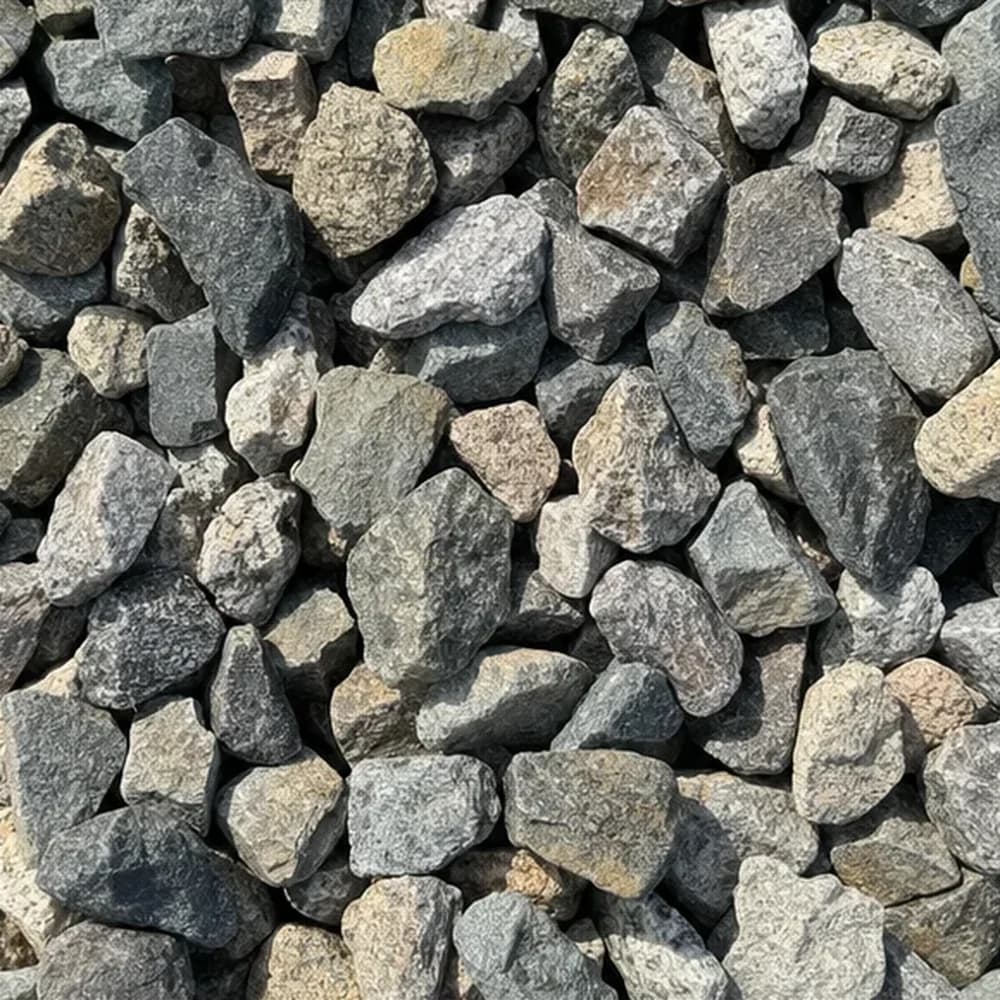
For Massachusetts rail beds, heavy pads, and access routes, Railroad Ballast supplies an angular layer that carries weight while passing water.
- Size: Roughly 1 inch to 2.5 inches
- Grading: Graded to interlock under load while draining freely
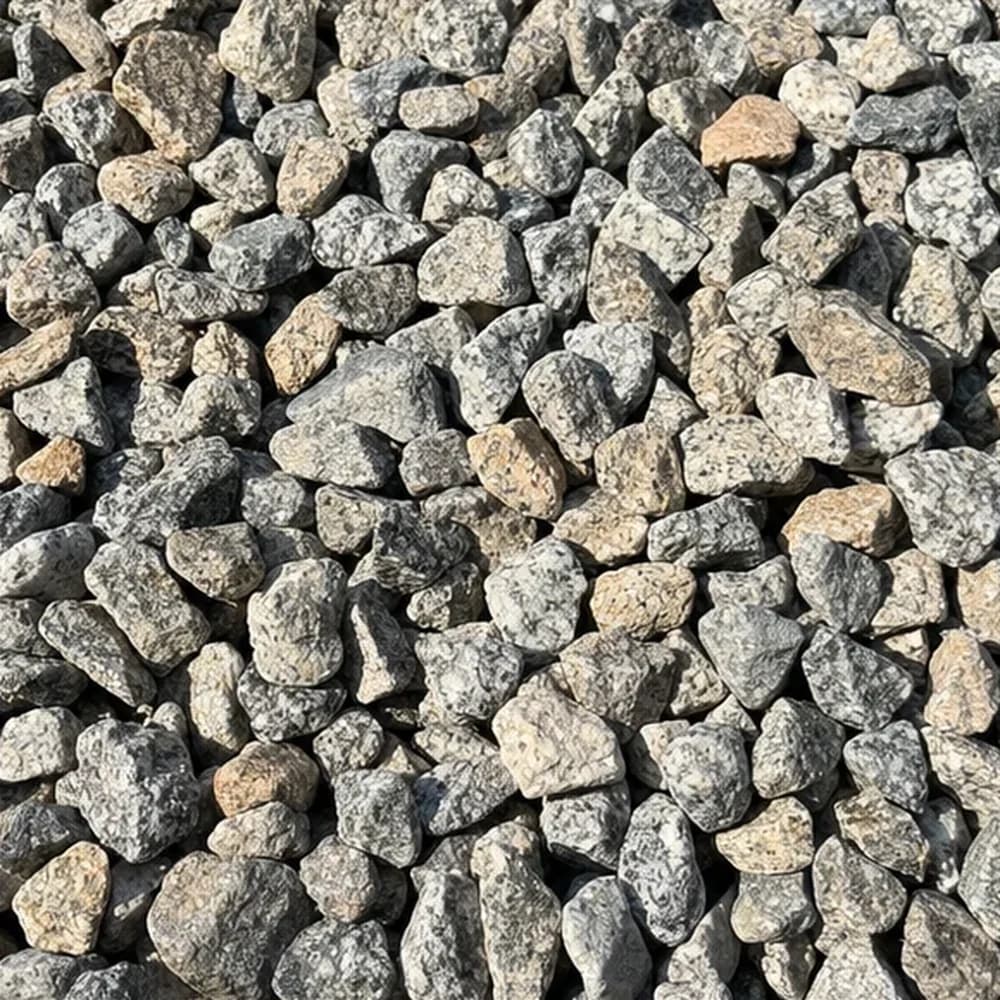
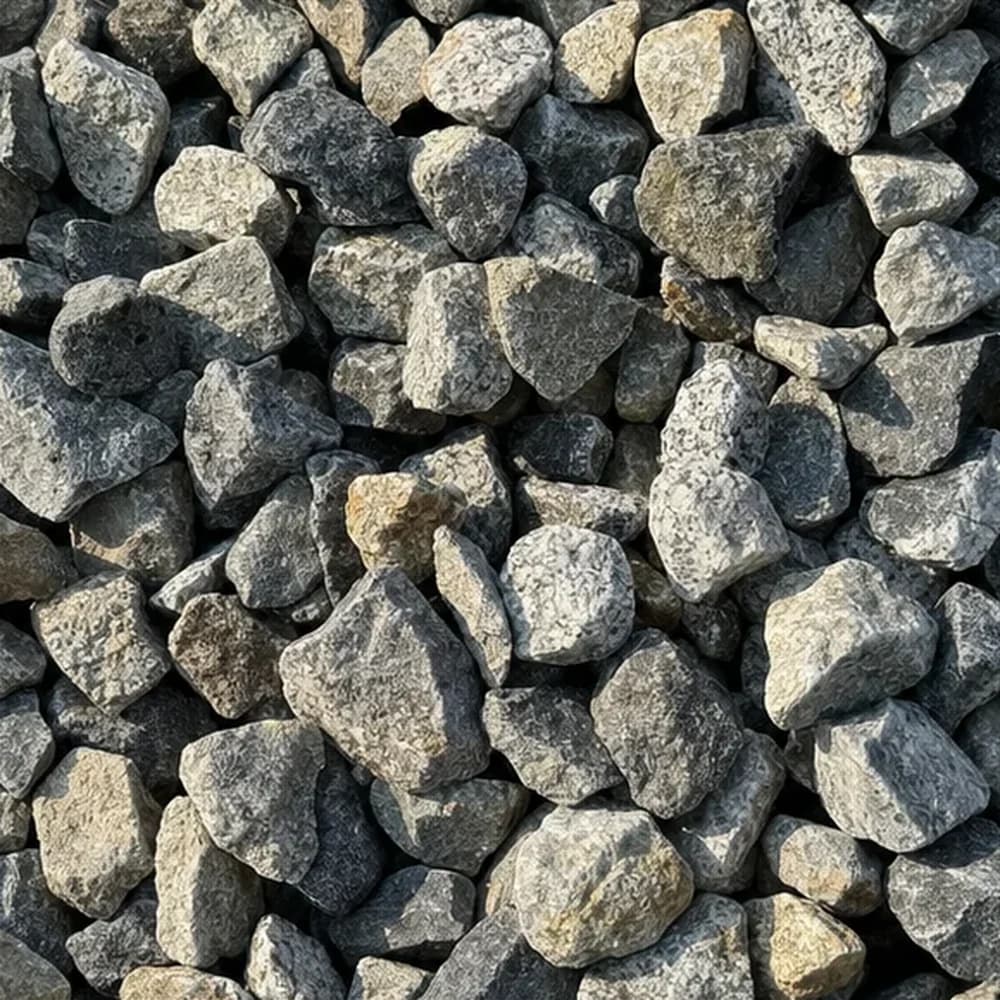
- Type: Large angular crushed stone
From $432 for 1 ton, delivery included (larger loads cost significantly less per ton)
Free delivery included
Free delivery anywhere in Massachusetts
Pick a delivery date
Weekday delivery, earliest Oct 30
“Grabbed railroad ballast from this company and it showed up right when I needed it. Free delivery was a nice bonus, and I'm really happy with the whole order.”
Brian B. · Verified Buyer
Get a Free Quote
Fill out the form and our sales team will get back to you within the hour.
Size and Grading
- Size
- Roughly 1 inch to 2.5 inches
- Grading
- Graded to interlock under load while draining freely
- Type
- Large angular crushed stone
The choice in front of most ballast buyers is not ballast or nothing. It is ballast or another few tons of the compacting blend that already sank. Somewhere on the property there is a gate, a yard corner or a lane that turns to soup every March, it has swallowed two loads already, and the question is whether to go coarser or go deeper. Going coarser is usually the answer, and that is what railroad ballast is.
The mud-free site entrance most ballast orders are for
Rail track beds are the material's name and a genuine use, but the volume around here goes into ordinary ground that has to carry weight and stay solid when the weather turns. A site or farm entrance is the archetype. Loaded trucks come through the same twenty feet a hundred times, the subgrade underneath gets kneaded, and any stone small enough to be pushed aside eventually is.
Pieces running roughly one to two and a half inches, crushed so every face is flat and every corner sharp, resist that. Under load they wedge against each other and the layer locks up rather than displacing. Meanwhile the gaps between them stay open, so water leaves instead of sitting in the layer and softening it. The same logic covers an equipment or container pad, a hardstanding for a trailer, and the boggy hundred feet of a pasture lane.
Railroad ballast on wet till and on Plymouth outwash sand
Two very different ground types, two different reasons the stone works.
On the dense lower till under Greater Boston and the Worcester plateau, water cannot get away downward. Snowmelt and spring rain perch near the surface, the subgrade softens, and anything sitting on it gets pumped. A thick layer of large open stone spreads the wheel load over a wider patch of that soft ground and gives the surface water a route sideways instead of a puddle to sit in.
On the deep outwash sand around Plymouth and Carver, drainage is not the problem. Bearing is. Clean sand under a loaded wheel simply moves out of the way, and the stone works there by bridging: large interlocked pieces spanning ground that will not hold a point load on its own.
Frost heave is the third reason, and it applies statewide under a 48 inch design frost depth. With effectively no fines in the layer, there is very little held water in it to freeze and lift, so a ballast pad comes through late winter far better than a fine-graded one.
Fabric first, bucket second, and no plate compactor
Fabric goes down before stone on any soft subgrade, lapped generously at the seams and run up the sides of the excavation. Skipping it is the single most common reason these pads fail. Without it, wet till works its way up between the pieces and within a season or two the drainage is gone.
Stone this size does not spread with a rake. A bucket, a skid steer or at minimum a lot of patience with a fork is what places it, and it should be tipped in from the edge and pushed out rather than walked over while loose. Do not expect a plate compactor to do anything useful. There is nothing in the layer to densify, so a couple of passes with a heavy roller, or simply letting site traffic bed it in, is the whole of the compaction.
Where a workable flat surface is needed on top, put a finer course over the ballast rather than trying to level the ballast itself.
Against #4 crushed stone, and against crusher run
These are the two real alternatives, and the differences are practical rather than technical.
| Material | Size | How it behaves | Pick it when |
|---|---|---|---|
| Railroad Ballast | roughly 1 to 2.5 in | Interlocks, drains freely, never packs flat | Repeated heavy loading, deep mud, bridging soft ground |
| #4 Crushed Stone | about 3/4 to 1-1/2 in | Similar behavior, slightly easier to place | Drains, wall backfill, lighter duty than a truck entrance |
| Crusher Run | 3/4 in minus with fines | Compacts into a dense firm layer | A surface that has to be smooth and hold its shape |
The trap is the third row. Crusher run makes the better-looking pad and the worse one where water is the problem, because the fines that let it pack are also what hold water to freeze. Many yards end up with both: ballast low down where the mud is, a compacting blend above it for a workable surface.
Why a paver patio and a dry creek bed take a different load
Two jobs this material is sometimes bought for and should not be.
A paver patio base needs a layer that compacts dead flat and a bedding course that screeds true. Ballast does neither. Use a compacting blend for the base and Stone Dust for the setting bed.
A dry creek bed is about appearance as much as function, and sharp gray crushed stone reads as construction material rather than a streambed. Rounded River Rock is the look, with a coarse stone underneath if the channel genuinely carries water.
A 14 by 50 entrance apron, figured to the ton
A hypothetical example. This site publishes about 2,900 lb per cubic yard for #4 stone and railroad ballast, roughly 1.45 tons per cubic yard, and that approximate figure converts the volumes below.
A 14 foot by 50 foot entrance apron at 8 inches:
- Area: 14 x 50 = 700 square feet
- Depth: 8 / 12 = 0.667 ft
- Volume: 700 x 0.667 = 466.7 cubic feet
- Cubic yards: 466.7 / 27 = 17.3
- Tons: 17.3 x 1.45 = 25.1
Take the same apron to 12 inches, which is not unreasonable where the ground is genuinely soft, and it becomes 700 cubic feet, 25.9 cubic yards, about 37.6 tons. That jump is worth seeing before the order goes in, because an extra four inches across a small area is another twelve tons on the ticket.
With the five percent the stone calculator adds by default, the 8 inch figure moves to roughly 26.4 tons. For a lane that bends, or a pad in two sections, the stone calculator totals up to five areas at once.
When the number is settled, choose a quantity and a delivery date on this page, or send dimensions from the contact page if the area is irregular. Delivery is arranged at checkout by ZIP code, and the tip spot needs to be reachable and clear.
Quickly Calculate How Much You Need
Material: Railroad Ballast
How to Measure
Measure the length and width of your project area in feet
Decide on depth in inches (2" for landscaping, 4" for driveways)
Enter the values above and we'll calculate the tonnage you need
Need help figuring out the right amount? We can help!
Call or text us at (508) 625-9266 and we'll help you calculate the right quantity for your project.
Not sure how much you need? The Stone Calculator has depth guides, coverage charts and worked examples for this material.
Frequently Asked Questions About Railroad Ballast
Customer Reviews
Grabbed railroad ballast from this company and it showed up right when I needed it. Free delivery was a nice bonus, and I'm really happy with the whole order.
Brian B. · Quincy, MA · Verified Buyer
Easy From Start to Finish
Everything went smoothly with my order from Massachusetts Rock Supply. The railroad ballast looked good and worked well for my project. I would feel confident ordering from them again.
Mark F. · Boston, MA · Verified Buyer
Went with these guys for railroad ballast and I'm really happy I did. The railroad ballast was great quality, delivery was easy, and I'd definitely order from them again.
Jennifer J. · Worcester, MA · Verified Buyer
Needed railroad ballast for a project and the team made it super easy, plus the free delivery was a nice bonus. I'm really happy with how it turned out and would definitely order again, highly recommend.
Kelly A. · Springfield, MA · Verified Buyer
Needed railroad ballast for a project and Massachusetts Rock Supply had a fair price for the amount I ordered. Delivery showed up exactly when expected, and I'd definitely use them again.
Hank F. · Cambridge, MA · Verified Buyer
Locks together well
I used it under a utility path where I wanted a heavy, angular material. It locked together well. It was a practical choice for the job at my Springfield, MA home.
Taylor B. · Quincy, MA · Verified Buyer
Railroad Ballast has 6 verified customer reviews with an average rating of 4.8 out of 5.