Drain Rock for Massachusetts Foundation and Wall Drainage
With ledge often close to grade in Massachusetts, Drain Rock helps keep water moving through wall backfill and drainage trenches.
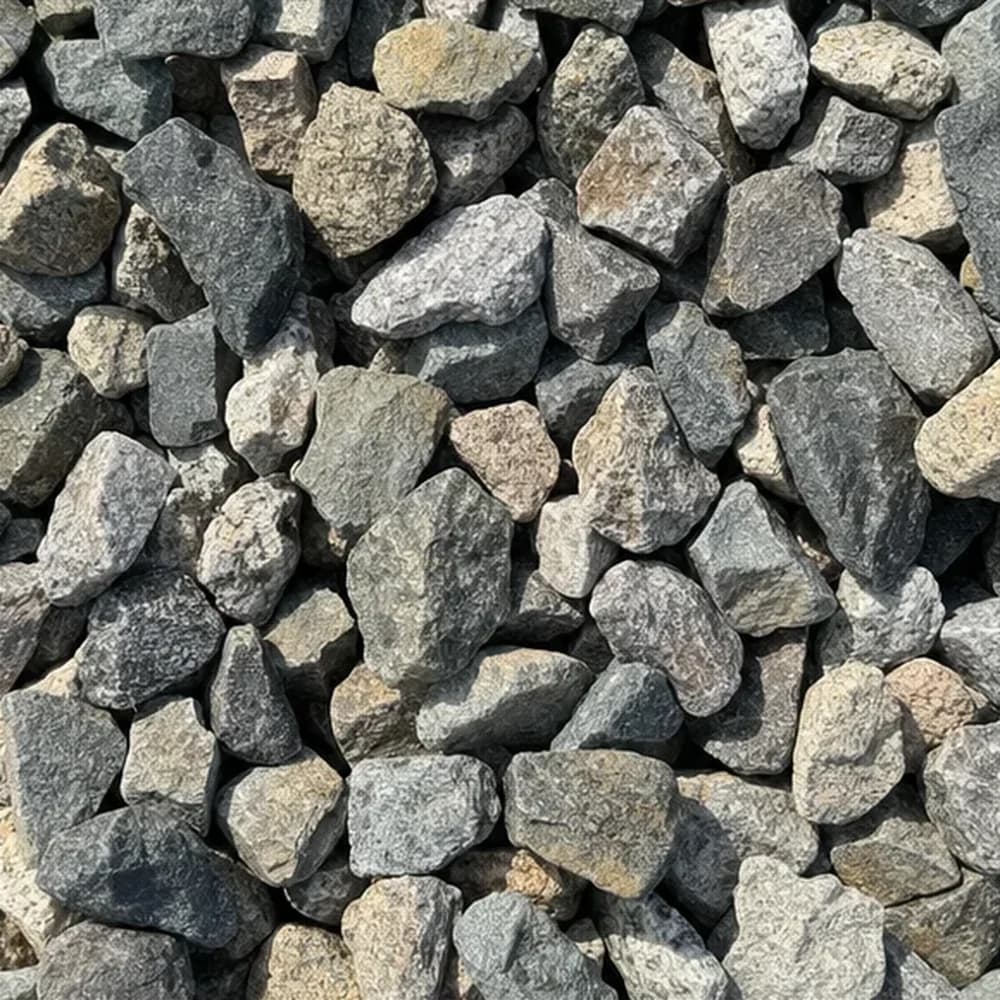
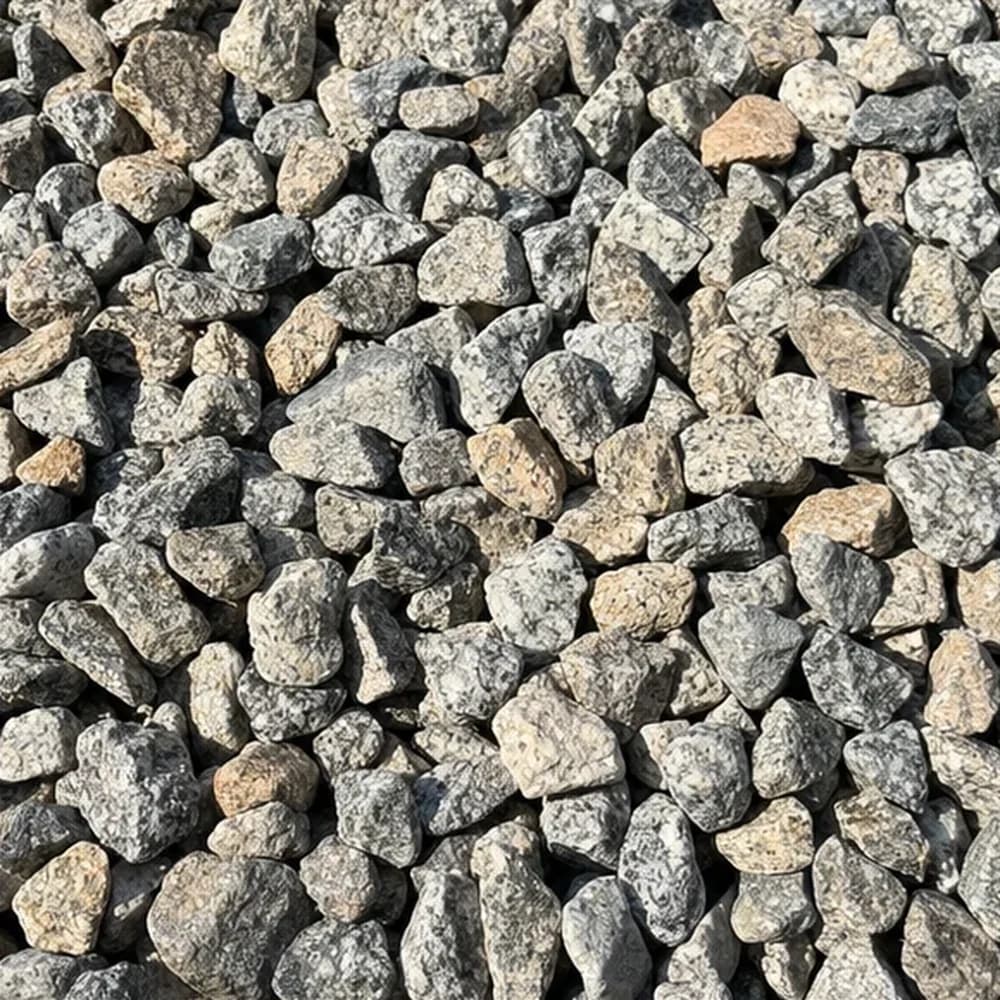
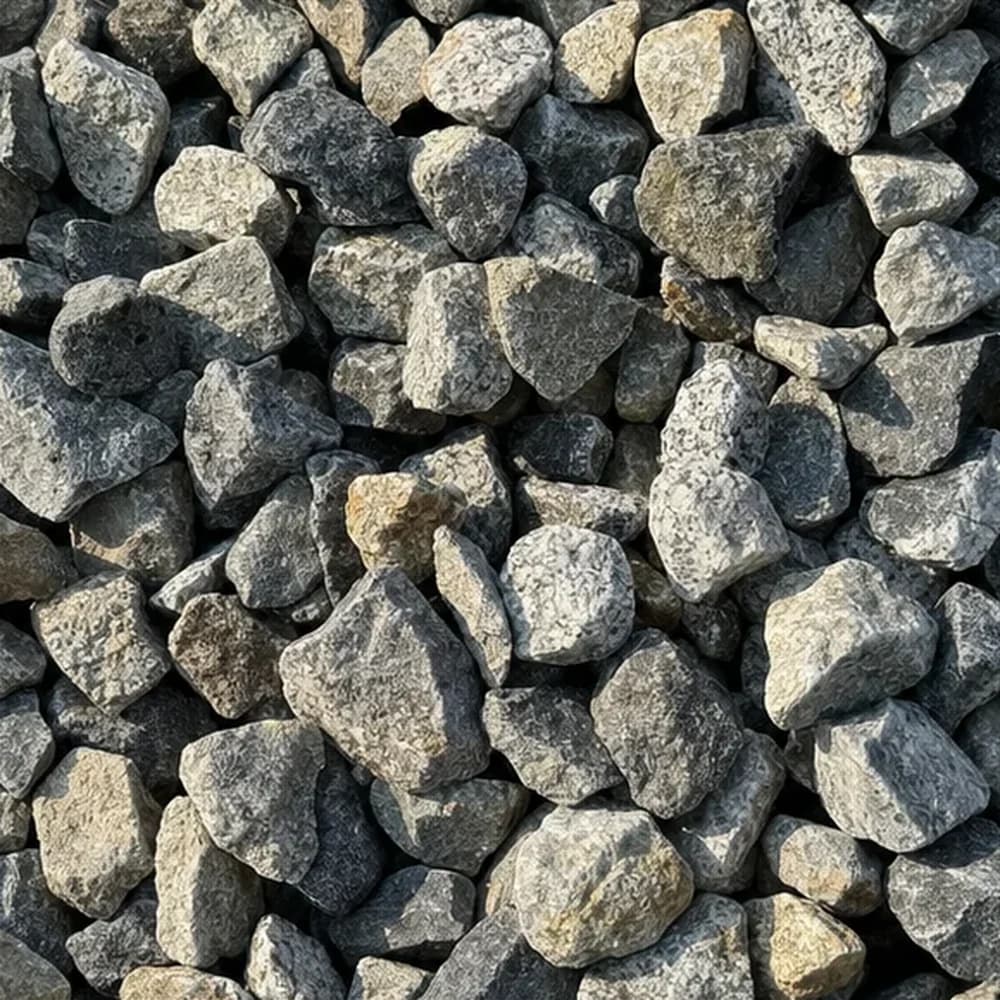
- Size: 3/4 inch to 1-1/2 inch
- Grading: Washed to remove fines and dust
- Type: Rounded or angular varieties
From $391 for 1 ton, delivery included (larger loads cost significantly less per ton)
Free delivery included
Free delivery anywhere in Massachusetts
Pick a delivery date
Weekday delivery, earliest Oct 30
“Ordered drain rock and the team got it here right on time. Really happy with how easy it was and I'd definitely order again.”
Greg L. · Verified Buyer
Get a Free Quote
Fill out the form and our sales team will get back to you within the hour.
Size and Grading
- Size
- 3/4 inch to 1-1/2 inch
- Grading
- Washed to remove fines and dust
- Type
- Rounded or angular varieties
Cellar walls in this state get their water in March, not in a summer storm. Snowmelt sits on dense till, the ground stays saturated for weeks, and the pressure finds the cold joint. Drain rock is the washed stone that goes into the trench to give that water somewhere to go: 3/4 inch to 1-1/2 inch, washed to take the fines and dust out, and available in rounded or angular form. Which of those two you want is the first real decision on this page.
Which load does a wet cellar wall actually need?
Washed stone in that size band, and nothing finer. The fines are what would otherwise fill the spaces between the pieces, and the spaces are the product. Water enters the trench, travels down through the open structure, reaches the pipe and leaves.
Anything with fines through it does the opposite. A compacting blend packs into a closed layer, which is exactly right under a driveway and exactly wrong against a foundation.
That is also why the nearest-looking products on the site are not automatic substitutes. 3/4" Crushed Stone and #57 Stone are both washed and both work in a trench. This one is graded across a wider band, 3/4 up to 1-1/2 inch, which puts a bit more open space in the same volume.
Rounded stone or angular stone against the backfill?
Angular for anything with soil pressing on it. Behind a retaining wall, the backfill above and behind the drainage zone bears down on it, and angular pieces hold their voids under that load where rounded stone can settle and close up.
Rounded where the stone will be seen. An exposed drainage feature, a visible channel or a finished edge reads better with water-worn stone, and there is no load on it to worry about.
For a buried foundation drain, take the angular load. Nobody is looking at it, and the trench wants the arrangement that stays open longest.
Can it firm up the turnaround the way processed gravel does?
No, and this is the most common wrong order on the page. Washed stone has nothing in it to bind, so a turnaround or parking pad surfaced with it will rut, scatter and push into ridges the first time a wheel turns on the spot.
A pad is built from a compacted stone-and-fines base, which here means Processed Gravel, finished with Driveway Gravel. Washed stone belongs underneath that build, in the drainage layer, or in a trench that takes water off the pad.
Will it drain the low corner that floods every March?
Usually not on its own, and often it makes the situation harder to read. Filling a low spot with stone does not raise the ground, it creates a buried reservoir that fills with silt in a few seasons.
Low ground gets fixed by changing its elevation and its fall. That is Fill Dirt work, compacted in lifts, capped with Top Soil if grass has to grow on it afterwards.
Where washed stone helps is in the drain that takes the water away once the grade sends it somewhere: a trench across the top of the wet area, a drywell at the bottom of a downspout run, or a pipe to a point where the water can daylight.
What goes around the pipe, and in what order, on dense till?
Five steps, in this order, and skipping the first is what shortens a drain's life on till and on the marine clays near the coast.
Line the trench with geotextile, run up both sides, with enough left to fold over the top.
Bed the pipe on stone rather than on soil, so the perforations are not sitting in mud.
Place stone around and over the pipe, keeping cover above it rather than a thin skim.
Fold the fabric over the whole stone package before backfill goes on.
Backfill on top, and keep loose soil from being shoveled straight against the stone at the ends of the run, which is where silt usually gets in first.
Septic and leach field work is a separate case. That is designed and inspected work, so take the size, depth and layout from the plan rather than from a product page.
How many tons for a 45-foot drain along a Merrimack Valley cellar wall?
A hypothetical example. A 45 foot run along a foundation, trench 18 inches wide, with 12 inches of stone around and over the pipe.
- Trench area: 45 x 1.5 = 67.5 square feet
- Depth: 12 / 12 = 1.0 ft
- Volume: 67.5 x 1.0 = 67.5 cubic feet
- Cubic yards: 67.5 / 27 = 2.5
Weight depends on which variety turns up. Angular stone sits in the crushed stone family this site publishes at roughly 2,800 lb per cubic yard, so 2.5 x 1.40 is about 3.5 tons. Rounded stone is closer to the site's river rock figure of roughly 2,700 lb, so 2.5 x 1.35 is about 3.38 tons. Both are approximate, and the difference over a trench this size is a third of a ton.
With the five percent the calculator adds by default, the angular figure becomes 2.63 cubic yards, near enough 3.7 tons. Confirm it in the stone calculator before a quantity goes on the order.
What has to be ready before the truck backs onto a narrow driveway?
The trench open, the fabric and pipe on site, and a tipping spot chosen. Delivery is arranged at checkout by ZIP code and the driver needs clear access to somewhere he can dump, which on most town lots means the driveway rather than the back garden.
Tarp the spot if it is paved. Work out the wheelbarrow route before the load lands rather than after. And if the trench runs along a boundary with no machine access, plan on the stone being moved by hand and order in a quantity you can shift.
Set a quantity and a date on this page once the figure is settled, or send the trench dimensions through the contact page and have the arithmetic checked first.
Quickly Calculate How Much You Need
Material: Drain Rock
How to Measure
Measure the length and width of your project area in feet
Decide on depth in inches (2" for landscaping, 4" for driveways)
Enter the values above and we'll calculate the tonnage you need
Need help figuring out the right amount? We can help!
Call or text us at (508) 625-9266 and we'll help you calculate the right quantity for your project.
Not sure how much you need? The River Rock Calculator has depth guides, coverage charts and worked examples for this material.
Frequently Asked Questions About Drain Rock
Customer Reviews
Went with them for drain rock and I'm really happy with how it turned out. Delivery showed up on the day they promised, and I'd definitely use them again.
Greg W. · Lowell, MA · Verified Buyer
Had drain rock delivered from Massachusetts Rock Supply, and it was just what I ordered.
Mark J. · Brockton, MA · Verified Buyer
Good Product, Easy Process
Massachusetts Rock Supply provided a smooth experience all the way through. I would choose this drain rock again for a future project. I would feel confident ordering from them again.
Amanda M. · Boston, MA · Verified Buyer
Grabbed drain rock from this company and it was exactly what I needed, delivery was easy and I'm really happy with it.
Kim N. · Boston, MA · Verified Buyer
Ordered drain rock and the team got it here right on time. Really happy with how easy it was and I'd definitely order again.
Greg L. · Springfield, MA · Verified Buyer
Drain Rock has 5 verified customer reviews with an average rating of 5 out of 5.